Anyone who knows me knows that I LOVE Christmas Music. I start listening to it in early November, because there is so much beautiful choral Christmas music out there. (I also have a big love for the crooners, Bing Crosby, Nat King Cole, Rosemary Clooney, etc.). Growing up in the Lutheran church, Christmas services were always filled with music – children’s pageants, choir anthems, carols sung by the whole congregation, and always Silent Night to end the evening (sometimes even with a German stanza). Those experiences are a big part of why I am so drawn to choral Christmas music today. It feels rooted in memory, tradition, faith, and community.
I’ve already been to a few Advent/Christmas concerts in Portland this year… a gorgeous service of Lessons & Carols by Cantores in Ecclesia, The Trio Medieval “Yule” concert, and the joyful Oregon Repertory Singers “Glory of Christmas” concert. This weekend I’m looking forward to In Medio’s “At the Holidays” program, and In Mulieribus’ contemplative program titled “In the Stillness”.
I am particularly excited to hear a newly commissioned version of God Rest Ye Merry, Gentlemen by Portland composer Carolyn Quick at the In Medio concert, and the title piece of the In Mulieribus program, Sally Beamish’s contemplative work In the Stillness, lovingly arranged for women’s voices by director Anna Song. Here is the original mixed choir version, sung by Voces8
Beamish’s In the Stillness also appears on one of my all-time favorite Christmas albums, Tenebrae choir’s In Winter’s House. Their earlier album, What Sweeter Music, is another stunning, beautifully curated holiday recording that I return to often.
Maybe it’s because of my Norwegian heritage, but two of my VERY favorite Christmas albums are the Norwegian Soloists Choir albums Rós – Songs of Christmas (2013) and Veni – Songs of Christmas (2022).I first encountered this ensemble when their conductor, Grete Pedersen, came to Portland for the 2015 National Collegiate Choral Organization conference and led a session on Norwegian folk music. Being part of that experience made hearing these albums even more meaningful.
If I’m in the mood for something a little more exuberant, A Choral Christmas by Voces8, Voces8 Foundation Choir & Orchestra is my go-to. My husband thinks it’s a little bit too “extra” (as the kids would say). But, sometimes that kind of joyful abundance is just what my heart needs.
I have a couple of newer albums that are in the current rotation. The first is Chanticleer’s brand new Christmas album, Joy to the World. The second is The Dawn of Grace: Music for Christmas by the Somerville College Choir, Oxford. This recording features seasonal choral works solely by female composers from the twentieth and twenty-first centuries and includes no fewer than eleven world premieres. Wow!
I love having these albums as companions throughout the season, but one of the real joys of living in Portland is getting to hear this music live, created by the incredible musicians in our own community. It feels like such a gift to have ensembles here who approach Christmas music with thoughtfulness, artistry, and heart.
p.s. There are still tickets available for tonight’s (12/20) In Medio performance and the In Mulieribus concert tonight (12/20) and tomorrow. (12/21) Maybe I’ll see you there!
Over more than three decades as a choral singer and listener in Portland, I’ve watched professional choral ensembles come into being, do extraordinary artistic work, and then quietly disappear. Portland is often described as a choir town, and that’s true, but fully professional choirs occupy a very different and much more fragile space than volunteer or community ensembles.
This post looks at the professional choral groups that have existed in Portland… which ones have endured, which ones have not, and what their histories suggest about what it takes to sustain a fully paid choir here.
A brief history of professional choirs in Portland
The first fully professional choral ensemble I was aware of in Portland (and the first that I sang with) was Choral Cross-Ties, founded in 1985 by Dr. Bruce Browne. At the time, Browne was also leading the Portland Symphonic Choir and teaching at Portland State University, and Cross-Ties quickly became a defining part of Portland’s professional choral landscape.
This was an explicitly professional ensemble, with all singers paid, and a mission that extended beyond the concert hall. One of its original goals was school outreach, responding to shrinking arts education budgets, and that sense of purpose was paired with consistently high artistic standards. The ensemble commissioned and recorded works by composers such as Morten Lauridsen and developed a national reputation that extended well beyond Portland.
Choral Cross-Ties gave its final concert in 2002, a retrospective program titled “Songs of Love and Conflict”. That concert marked Browne’s retirement. The ensemble did not fold because it failed or lost momentum. It ended because its founder stepped away. By any reasonable measure, Choral Cross-Ties was a success, and it set a benchmark for what a professional choir in Portland could be. (Note: You can expect a detailed blog post about Dr. Browne’s legacy and what it meant to me personally sometime in the future).
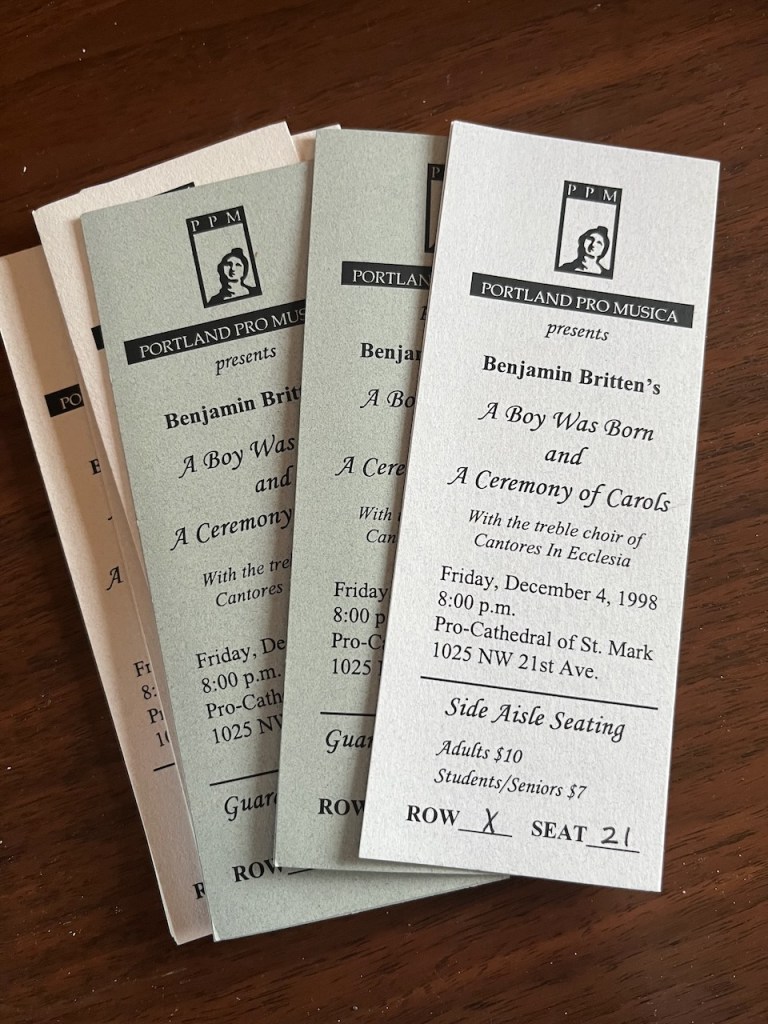
In 1998, Portland Pro Musica appeared as a new professional chamber choir under the direction of founder Christopher Kula. Early coverage in The Oregonian made it clear that this was a paid ensemble and that, at least initially, it was personally funded by its director.
Critic David Stabler described the group as a small, flexible ensemble of singers with extensive professional experience, many of whom were also singing with Choral Cross-Ties at the time. He noted that they could “sing just about anything thrown at them,” and even while questioning whether the group had fully defined its artistic identity, he acknowledged their potential, writing that with the right challenge they were capable of making “heads snap and hearts skip a beat.”
Although Portland Pro Musica began as a founder-funded ensemble, it later formalized as a nonprofit organization, supplementing ticket revenue with grants and donor support. Artistically, the choir leaned heavily into ambitious programs, including Britten’s A Boy Was Born and Poulenc’s Sept Chansons. Despite strong musicianship and positive critical attention, the ensemble folded in the early 2000s.
Portland Vocal Consort, directed by Ryan Heller, was active by the late 2000s and consistently described as a professional ensemble. While its exact lifespan is harder to pin down, it was clearly part of the same professional ecosystem, drawing singers who were also active in other paid choirs in Portland.
A 2013 Oregon ArtsWatch overview of Portland’s choral scene singled out Portland Vocal Consort for its Best of the Northwest program, an annual concert devoted entirely to music by living Northwest composers. This focus places the ensemble squarely within a moment when Portland’s professional choirs were not only performing new music, but actively shaping a regional compositional voice.
Like Portland Pro Musica, The Ensemble, founded and conducted by Patrick McDonough, began as a founder-funded project and later became a 501[c](3) organization, receiving grant and donor support alongside ticket revenue. From the beginning, The Ensemble focused on small-scale, carefully curated programs, ranging from Monteverdi to Arvo Pärt. In the spring of 2013, Oregon ArtsWatch described Portland as having “cultivated a new choral landscape. Significant. Dramatic,” and included The Ensemble among a group of emerging, small professional choirs the author characterized as “boutique choirs.” The term fits. These were compact ensembles with distinct artistic personalities, deliberately positioned outside the large-chorus model. From my perspective as a singer in the group, The Ensemble sang some very challenging repertoire never performed in Portland before, including Tarik O’Regan’s, The Ecstasies Above and Ola Gjeilo’s Dark Night of the Soul.
Another fully professional group to emerge during this period was Vir Men’s Ensemble, a 16-voice men’s choir that debuted in November 2013, directed by Adam Steele and Gil Seeley. Oregonian coverage described Vir explicitly as a professional ensemble and noted that its singers were drawn from other paid choirs in Portland, including Cappella Romana, The Ensemble, Resonance Ensemble, and Portland Vocal Consort. Vir’s debut concerts featured repertoire ranging from Renaissance polyphony to contemporary works. References to performances in early 2014 suggest that the group continued beyond its initial launch, but not nearly as long as hoped or anticipated.
A more recent entry in Portland’s choral landscape is Nexus Vocal Ensemble, a chamber choir focused on contemporary and unconventional repertoire. Nexus made its public debut in November 2019 under the direction of founder Lennie Cottrell, paused during the pandemic, and returned for a concert in May 2022. Singers in that group are high caliber and were paid a small stipend. My intel from one of the singers is that they are currently on hiatus, but hope to be back and eventually become a fully-paid group.
The Long Game
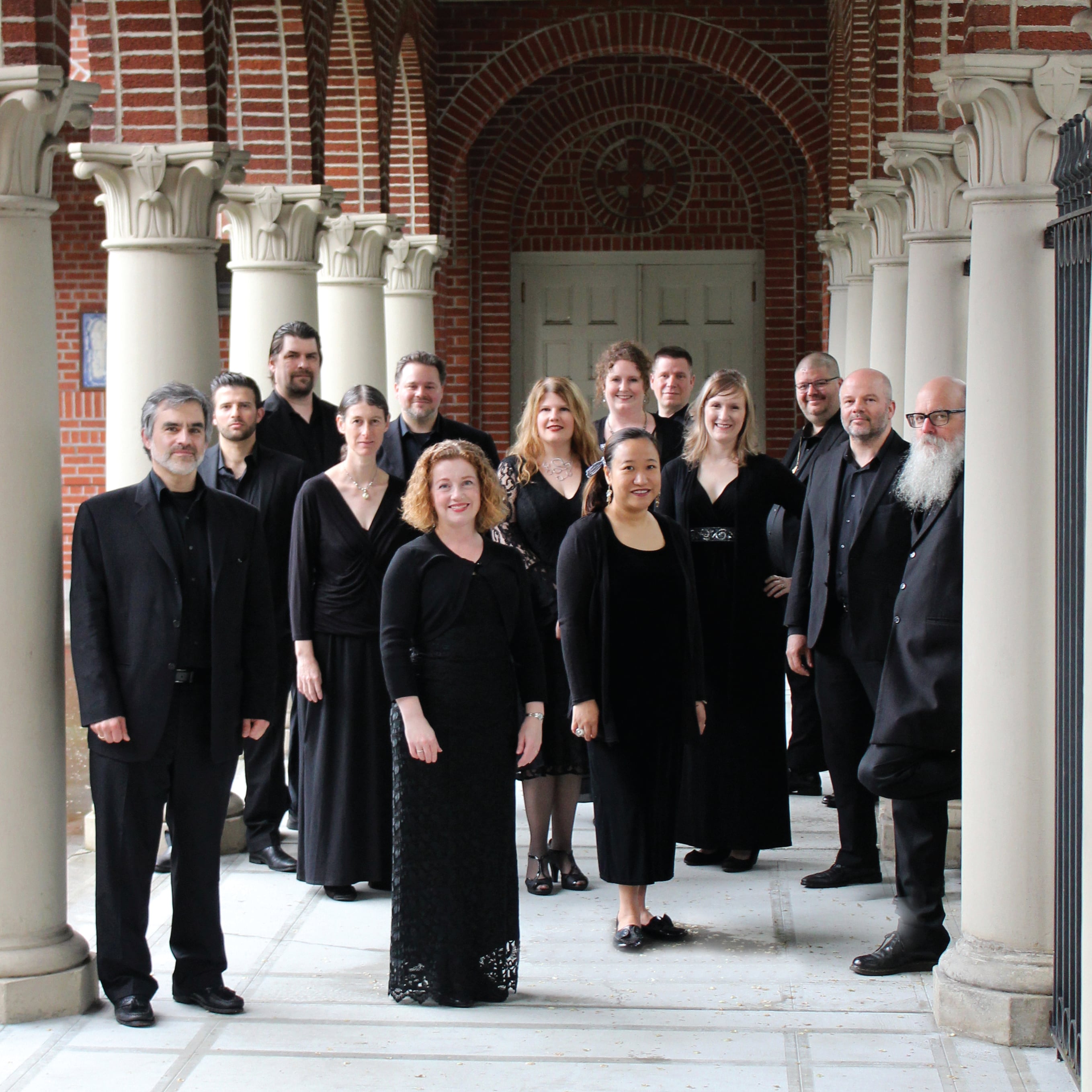
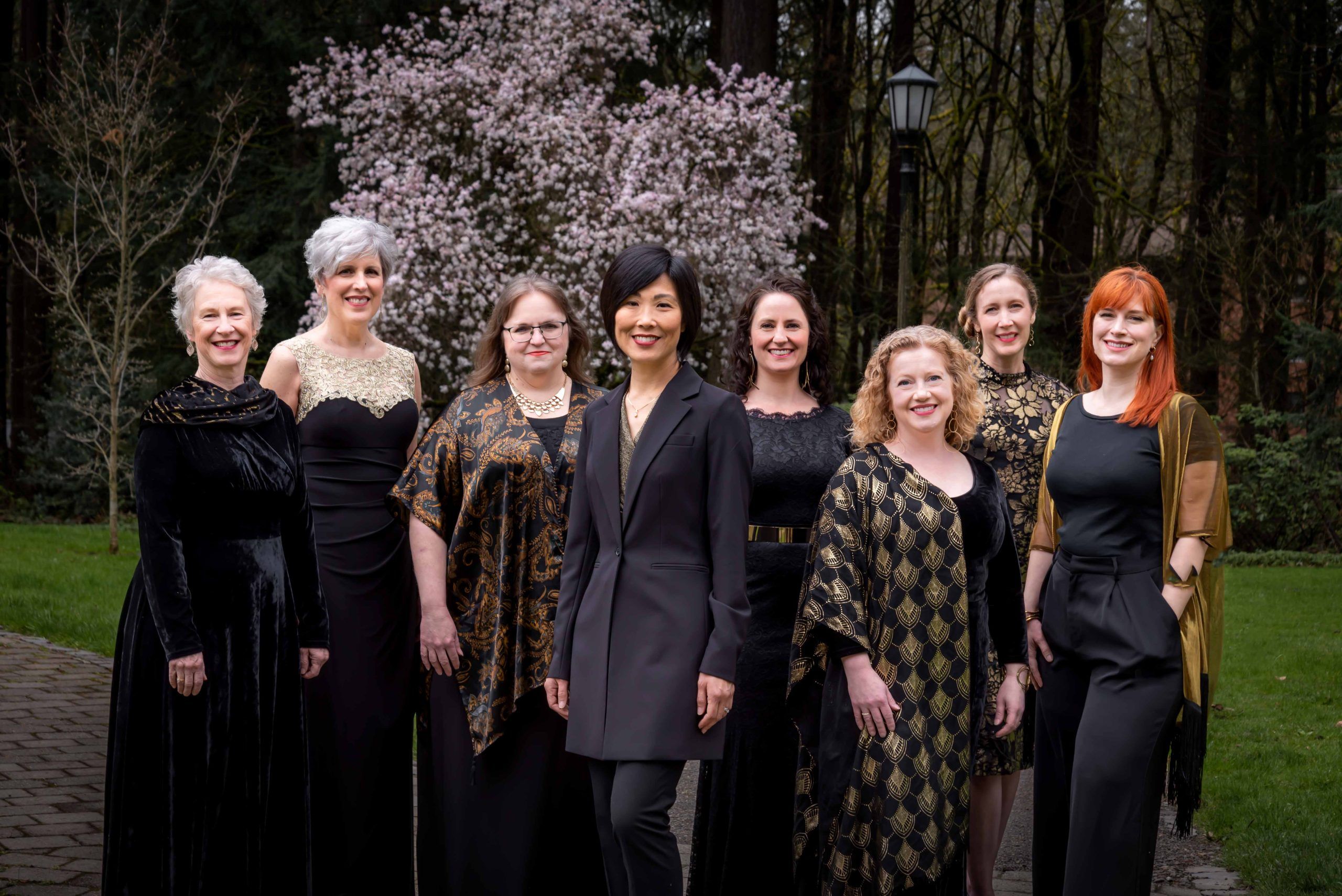
Three fully professional choral ensembles in Portland have not only survived, but flourished: Cappella Romana (founded 1991), directed by Alexander Lingas, In Mulieribus (founded 2004), directed by Anna Song, and Resonance Ensemble(founded 2009), directed by Katherine FitzGibbon. What distinguishes these groups isn’t just strong leadership (though that matters) or quality of performance (which these groups have in spades), but clarity of purpose.
Cappella Romana’s focus on Byzantine chant and sacred music of the Christian East and West places it in a highly specific musical and scholarly niche. In Mulieribus has built a similarly clear identity around Medieval and Renaissance sacred music for women’s voices. Resonance Ensemble has defined itself through contemporary repertoire centered on social justice and commissions by underrepresented composers. These distinctions deepen community relevance and help sustain a professional model. There is much more that I could say about each of these groups, as I am personally involved in all of them in some way, but I’ll save that for another day.
Cappella Romana, Resonance Ensemble, and In Mulieribus
How do you keep the music playing?
It is important to say that artistic quality was not the issue for Portland Pro Musica, Portland Vocal Consort, The Ensemble, or any of the other pro choral groups mentioned. Reviews, programming choices, and the caliber of singers involved all point to high artistic standards. But, let’s face it, it always comes down to money.
What’s striking is that this fragility wasn’t something we can only see in retrospect. People were already noticing it. Writing in 2013, Oregon ArtsWatch cautioned that “some of these choirs may well be gone missing in the next decade,” noting that ensembles founded by a single individual, or those without a clearly defined niche, often struggle to survive the fiscal challenges that arise over time.
That observation feels less like hindsight and more like something we probably should have paid attention to. Fully professional choirs are expensive by design. Paying singers, renting venues, commissioning music, and maintaining even minimal administrative infrastructure adds up quickly. Founder funding can make an ensemble possible in its early years, but transitioning from that model to long-term stability is difficult. Grants are often restricted, donations fluctuate, and ticket sales rarely cover the full cost of doing the work.
Sustaining the Sound
Portland’s newest fully professional vocal ensemble, Evenstar Ensemble, founded by artistic director John Eisemann, bass Alex Johnson, and soprano Jen Milius, enters this landscape with the benefit of history. The past few decades suggest that artistic excellence is necessary, but it is not enough on its own.
Sustainability seems to depend on a clear artistic identity, diversified funding, and organizational structures that don’t place the majority of the burden on one person. Portland has shown again and again that it can support professional choral music. The challenge, as always, is turning inspired beginnings into something that lasts.
Portland’s professional choral scene has never existed by accident. Every ensemble that has lasted did so because audiences showed up, singers committed to the vision, and people chose to support the work financially, even when the margins were thin. Artistic vision matters, but so does practical support. Professional singers deserve to be paid fairly, and ambitious programming, commissioning, and community engagement all depend on resources behind the scenes.
If this history resonates with you, or if you’ve been moved by the work of any of Portland’s professional choirs, I hope you’ll consider supporting them directly. Donations of any size help keep this ecosystem alive and make it possible for these ensembles to keep taking artistic risks, paying musicians, and contributing something distinctive to Portland’s cultural life.
I keep hoping to win the lottery jackpot so I can start endowments for all of these groups, but until that happens, we can all help in more practical ways. You can support Portland’s current professional choral ensembles here:
And of course, if professional choral music isn’t your focus, supporting any local arts organization matters. The survival of Portland’s artistic life depends not just on creativity, but on community.
This afternoon I’ll be attending Mass Appeal, where Cappella Romana joins the Portland Youth Philharmonic Camerata for Igor Stravinsky’s crisp, modern Mass for choir and double wind quintet and Anton Bruckner’s soaring Mass No. 2 in E minor for double choir, reeds, and brass, with guest conductor David Hattner. These two works couldn’t be more different, yet together they promise an afternoon that speaks to both discipline and devotion — two qualities that define Portland’s choral scene at its best.
I don’t feel the need to write a concert preview, as that has already been elegantly written by Daryl Browne for Oregon ArtsWatch, or program notes, which have been thoughtfully constructed by Mark Powell.
But, what I do want to write about is the fact that we have a world-renowned choral ensemble here in Portland and many people aren’t aware how unique that is. Full disclosure, I sang with Cappella Romana for over 20 years, from 1997-2018, and I didn’t realize myself until many years into my tenure what a rare and distinctive ensemble they were.
Cappella Romana specializes in early and contemporary sacred music of the Christian East and West, particularly Byzantine chant and works inspired by Orthodox traditions. This focus is rare among professional choirs, giving Cappella Romana a distinctive artistic identity rooted in both historical scholarship and living performance tradition. The ensemble is closely connected with academic research, as founder and music director Alexander Lingas is both a conductor and scholar, which ensures that performances are informed by the latest historical and musicological discoveries, bridging the gap between scholarship and artistry.
The choir’s singers are specialists in an unusually broad range of vocal techniques, from the resonant sonorities of Byzantine chant to the refined polyphony of Renaissance and the rhythmic and harmonic challenges of modern choral music. This versatility creates a sound that is both powerful and precise. Nearly all of the singers perform with other vocal ensembles in town, including In Mulieribus, Resonance Ensemble, Cantores in Ecclesia, and many more.
When I think about Portland’s professional choral singers, the first words that come to mind are dedication and balance. Many sing in several choirs, teach, tour, and hold day jobs — all while keeping families and creative lives in motion. It’s hard work, but it’s also what gives Portland’s choral community its heart.
What strikes me most is how ensembles like Cappella Romana elevate Portland’s entire choral community. Having sung with them for so many years, I know firsthand the dedication, artistry, and camaraderie that drive their work. Their presence reminds me that world-class music doesn’t just happen elsewhere. It thrives right here at home, sustained by singers who teach, perform, and give so much of themselves to this city’s musical life.
Tickets are still available at the Cappella Romana website. Today – Sunday, October 26th at 2 pm at St. Mary’s Cathedral.



 Portland Choral Notebook
Leave a comment